The mechanics
LQA is responsible for ensuring the accuracy of localization across many areas that people outside of the specialism might not even be aware of. These areas are typically checked in rounds of testing, with two being the standard for most games: one for finding localization bugs and the other to confirm they have been correctly fixed. However, if time and cost allow, multiple rounds ensure more opportunities for assessment, leading to a better game. LQA includes different testing formats. Linguistic testing covers grammar, spelling, regional data formats and punctuation errors, and includes checking the in-game text against a glossary of proper names and terms specific to the game itself. Aside from hunting for typos and bad grammar (see above), accuracy and consistency of terms are all-important checks to make when playing through a game. Text must be consistent everywhere – from menus to HUD elements to many, many lines of dialogue. It helps when LQA testers are also game players, since familiarity with gaming conventions and terminology can minimize confusion and aid testers in making their assessments. Another vital aspect of linguistic testing is the process of playing the game to see the translated text in action. The comic below illustrates how a simple line of dialogue can be ambiguous without the proper context. Without being able to see the visuals and thus the context of the game, the translator could easily interpret and translate the phrase “Watch Out! Duck!” in 3 different ways: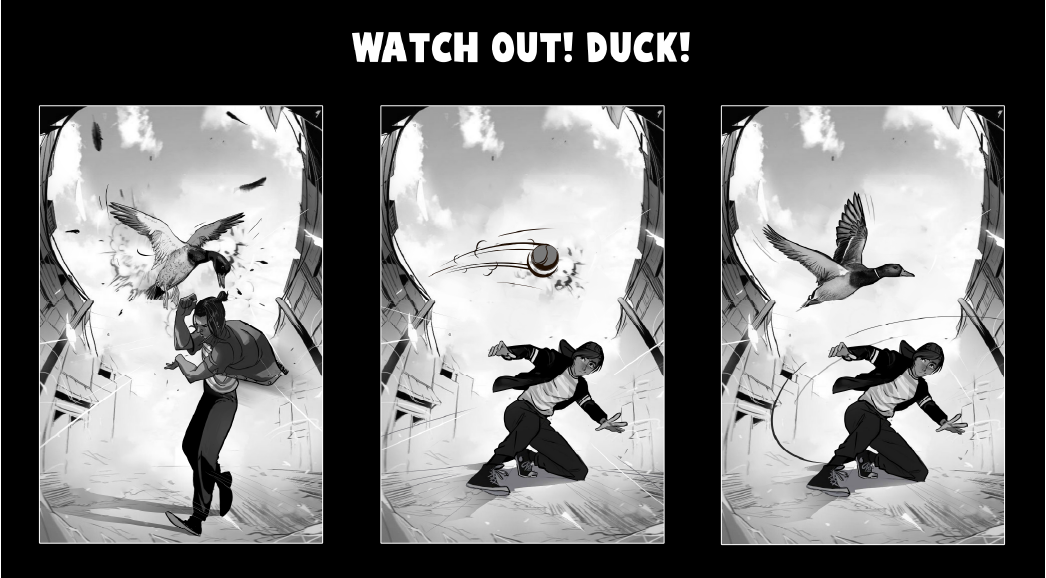
- Careful, a duck attacks!
- Careful, bend down not to get hit! (An object is flying towards you.)
- Play of words: Get down, to avoid being hit by a duck!
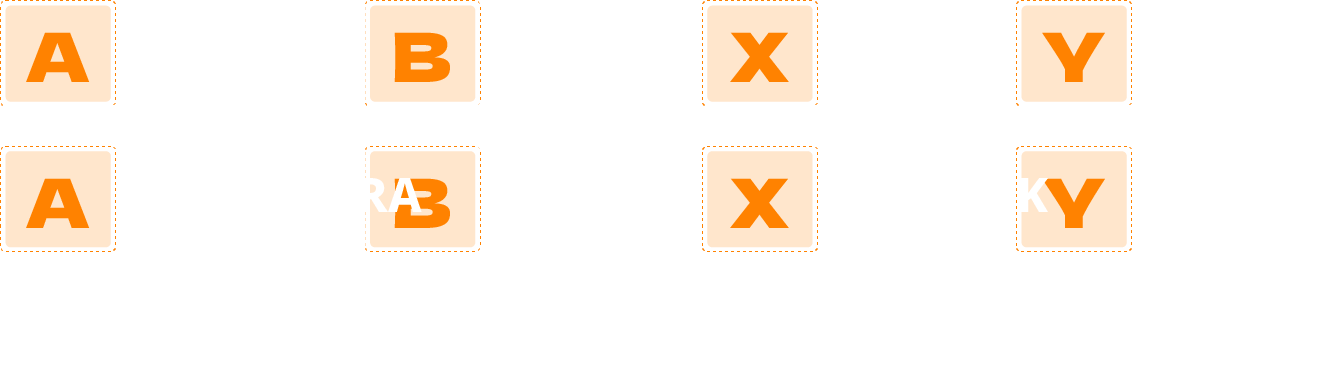
Top line: English button press names. Bottom line: Swedish translations, with text overlapping the buttons, hampering readability.
Finally, functional or implementation testing checks for localization problems stemming from a game’s code. Common issues include untranslated text – for example, source text appearing rather than the appropriate localized text; string IDs or placeholder text appearing in-game; special characters not appearing properly; or other language-specific issues. The most severe kind of functional issues are game blockers, where a bug such as a crash might prevent testers from accessing and checking certain sections of text. These issues must be reported immediately and fixed as a priority so that LQA testing can resume.5 key benefits of Localization QA
It’s all well and good for a game to be bug-free, but LQA goes much deeper than checking for wrong terms and graphical glitches. The true value of LQA lies in gaining your players’ trust and providing them with a seamless experience in their native language. Localized game versions must be as faithful as possible to the tone, characterization, and ideas of the original – all while ensuring it is appropriately adapted to the target region. Below are just a few of the benefits LQA testing can provide for your game: 1.Positive early sentiment It’s true that you never get a second chance to make a good first impression. Even though digitally released games can receive Day One patches, sometimes even that is too late to prevent players from talking about a game’s issues on social media. Proper planning is needed to release a solid game, which must include time allotted for LQA testing. No one expects games to be completely free of errors these days, given the scope and complexity of modern titles, but there are acceptable levels that should be acknowledged. Paying attention to what players are saying about competitors’ releases should guide your team to understand where to place focus pre-release. 2. Properly guided players On an experiential level, the way a player is guided through the opening moments of a new game can have a lasting effect on their decision to keep playing. It's important to remember that every game is potentially someone’s first, so some handholding is required, especially on easier difficulty settings. Tutorial text and dialogue should be clear and simple while giving players enough credit for common sense. However, if text is functionally incorrect and provides faulty or confusing instructions, a player’s progression through the game may become blocked, leading to discouragement and potentially abandoning the game altogether. It’s thus paramount to have LQA testers play through every section of a game several times, especially the beginning, to ensure clear and appropriate guidance is given at every step. 3. Effective characterization Proper translation isn’t just about picking the right words, but understanding a target language’s sentence structure, pacing, and tone. An intriguing storyline in one language might become a confusing mess if translated without the right linguistic sensitivity. Players might struggle to understand characters’ personalities with language that doesn’t fit the expected cadence or style. Successfully rewriting dialogue from one language to another relies on the creativity and insight of a conscientious translator – and this dialogue should always be checked by LQA teams in an in-game context. Translators and LQA testers alike should always be native-level speakers with the ability to understand the intent of the writers, as well as having the knowledge of slang and speaking patterns of both the originating and target cultures. Giving players memorable, believable, and relatable characters is a sure way to get them on-board for the full duration of the game. 4. Cultural sensitivity Given that video games are now global, it’s more important than ever to pay close attention to cultural issues. Norms and taboos differ from language to language and region to region. If a game was machine translated, such nuances would almost surely not be picked up – from depictions of blood, historical events, and religious practices, to references about race and gender that have different norms across regions. Taboo terminology and expletives can upset players, leading to costly hits to a developer’s reputation and ratings. All these elements should be checked by LQA testers who are local to the target region and language. And in return for this assiduous attention to detail, game makers will be rewarded with respect and loyalty from players around the world. 5. Demonstration of mastery One of the hobgoblins of poor translation is inconsistency. There are many examples of bad translations in video games where item names change throughout, or speech patterns from a single character differ radically from one section to the next. Names, scripts, and functional text strings should all be locked in at the beginning of a project. If a change does occur during the LQA process, the team should be notified at the earliest, and every instance of that change needs to be altered. Ultimately, this is about respecting the quality of the originating game and demonstrating to the playing public that your work is comprehensive and masterful in all languages.